Introducing Open Session
Open Session is an open-source cloud-based agent orchestrator. It has everything your team needs to ship, analyze, and talk to customers. It runs in your browser, on Mac, and on Windows. iOS is coming soon.
Open Session was built by Tella. We wanted an orchestrator that fit our team’s exact needs. We found existing apps to be either the wrong fit or too expensive. It’s also just fun to build your own tools.


We could just keep Open Session for ourselves but we’re open-sourcing it because we believe:
- Every company is going to work like this
- Teams can and should own their tooling
- Agent orchestration revolves around a common set of tooling
Everyone uses Open Session at Tella, and not just for product development either. Open Session helps us with operations, support, data analysis, finance, and general AI chat.
Since July, 80% of code shipped to Tella has come from Open Session. It’s become the most important tool that our team uses.
How does it work
Open Session is a self-hosted web app that uses the Pi agent engine. Pi connects sessions to different model providers, while Open Session manages conversations, Git worktrees, PRs, automations, and execution that you can run on your own machines or in sandboxes.
Because it’s open source, you can fork it and fully adapt it to your company. But Open Session is also extensible at the product layer. You can connect MCPs, skills, automation recipes, integrations, sandbox providers and more.
You can also configure branding, identity, repositories, and company routines without maintaining a fork.
Sessions
Open Session’s most important concept is the session. They’re durable, steerable conversations with an agent that have their own transcript, model, execution context, prompt queue, and visible state.
Code sessions run in an isolated Git worktree and can edit files, run tests, and open a PR. Ask sessions are read-only and work great for research, planning, or codebase Q&A.
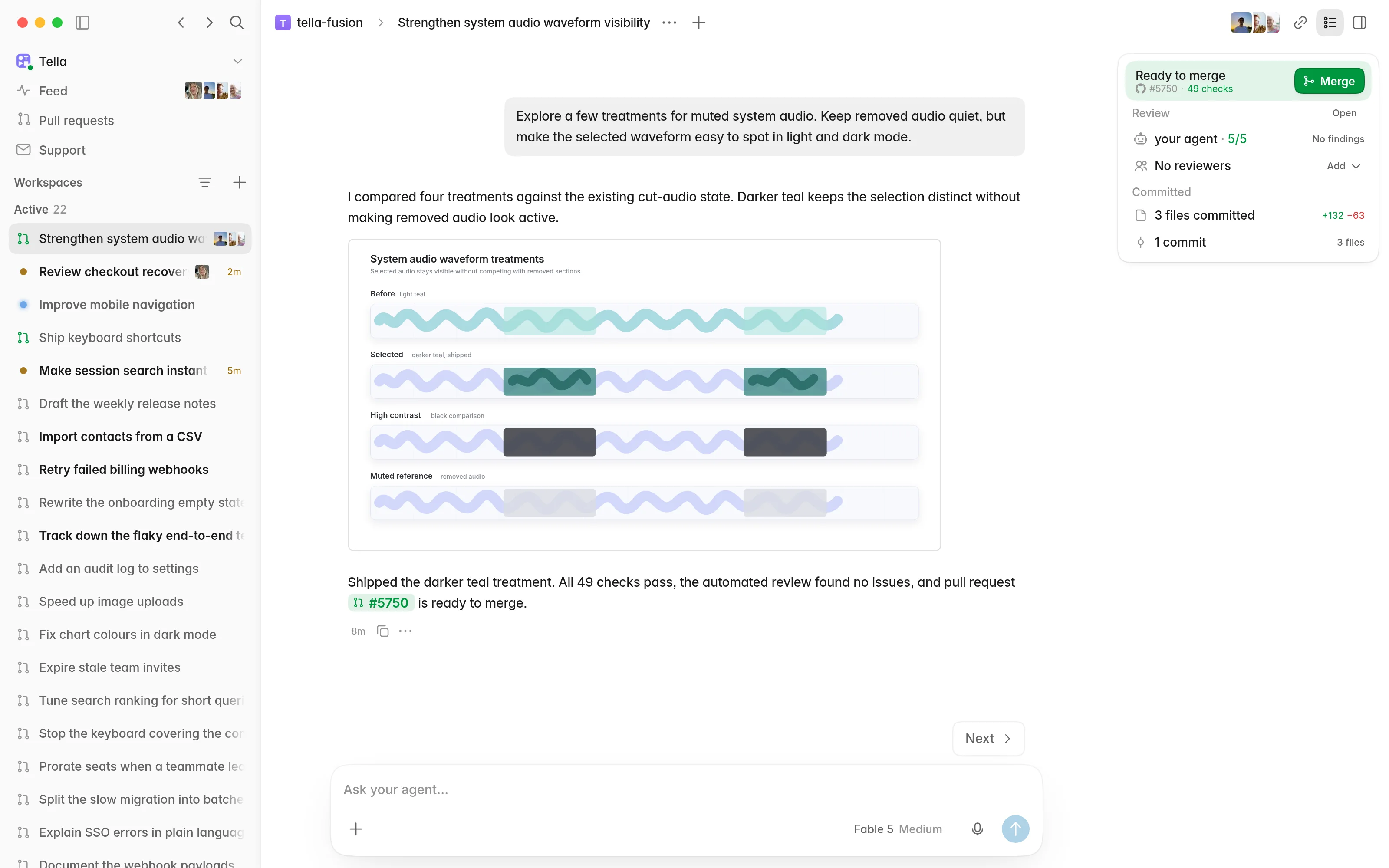
Sessions feature throughout Open Session. You can trigger new sessions from schedules or external events, resume the same session over several days pursuing a goal, or launch them from tools like Slack, Linear, Plain, and GitHub. Sessions can also delegate work to others. Regardless of how a session starts, you can open its transcript, watch it work, steer it, answer questions, review its changes, and continue the conversation.
Your cloud agents
Open Session is designed to run in your own cloud (or Mac mini). This means you can do fun things like run as many agents as your server can handle, close your laptop while an agent is working, and code from your phone. But we’ve taken things further and made Open Session fully collaborative (for humans).
Every session can be shared with your team as a link. Collaborators can review, prompt or steer in the same session with you.
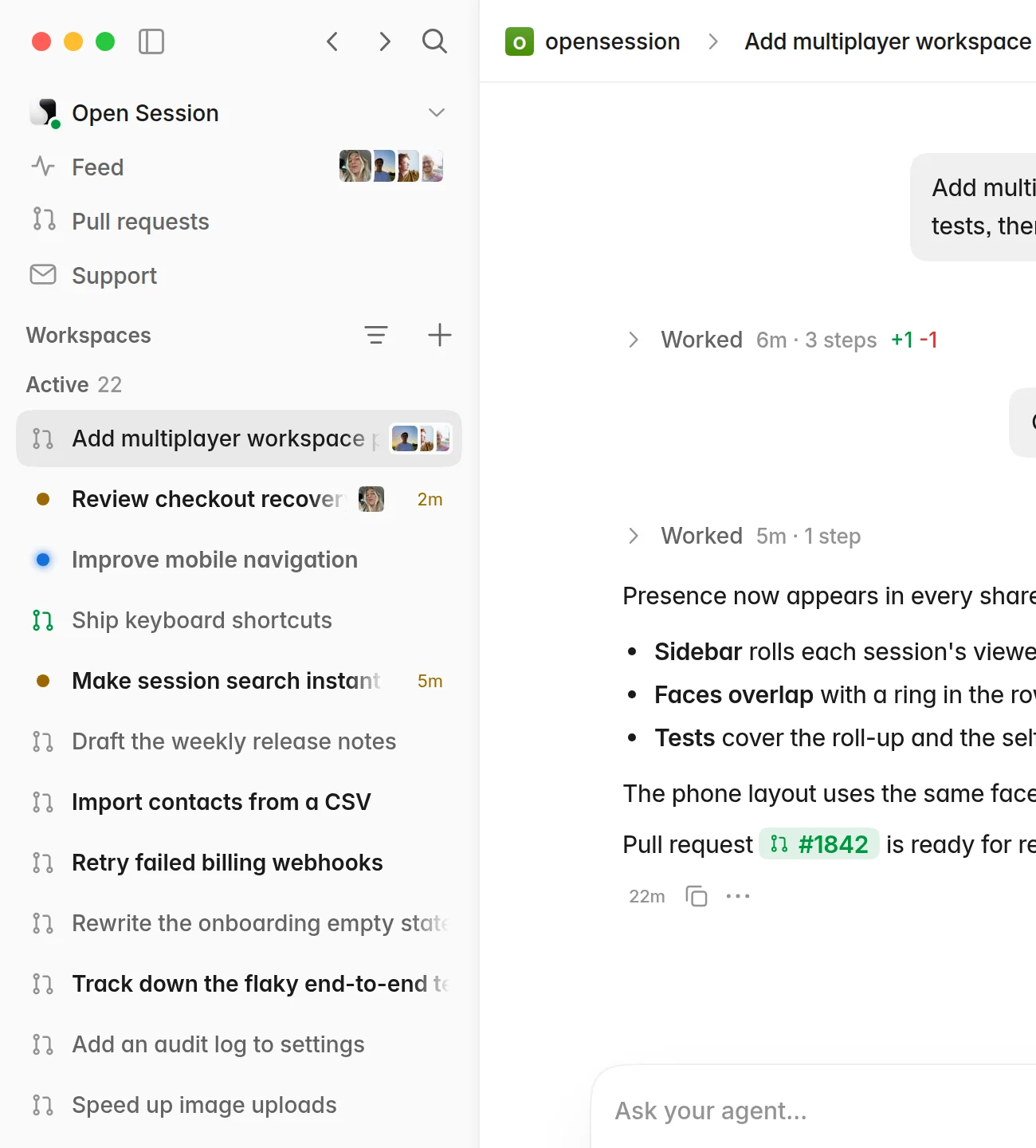
A session lives inside a Workspace, which can support multiple related sessions. This is great for longer-running collaboration, where you don’t want several people prompting in the same session.
Inside a workspace, each session gets its own tab with its own agent, model, and transcript. But all sessions in a workspace share the same branch and worktree.
The general idea is that if you move everything into the cloud then you can work faster and with greater flexibility. You can work on more things at the same time, and your whole team can participate.
More ideas
There's lots more interesting ideas and features in the product. Here's a few that our team likes:
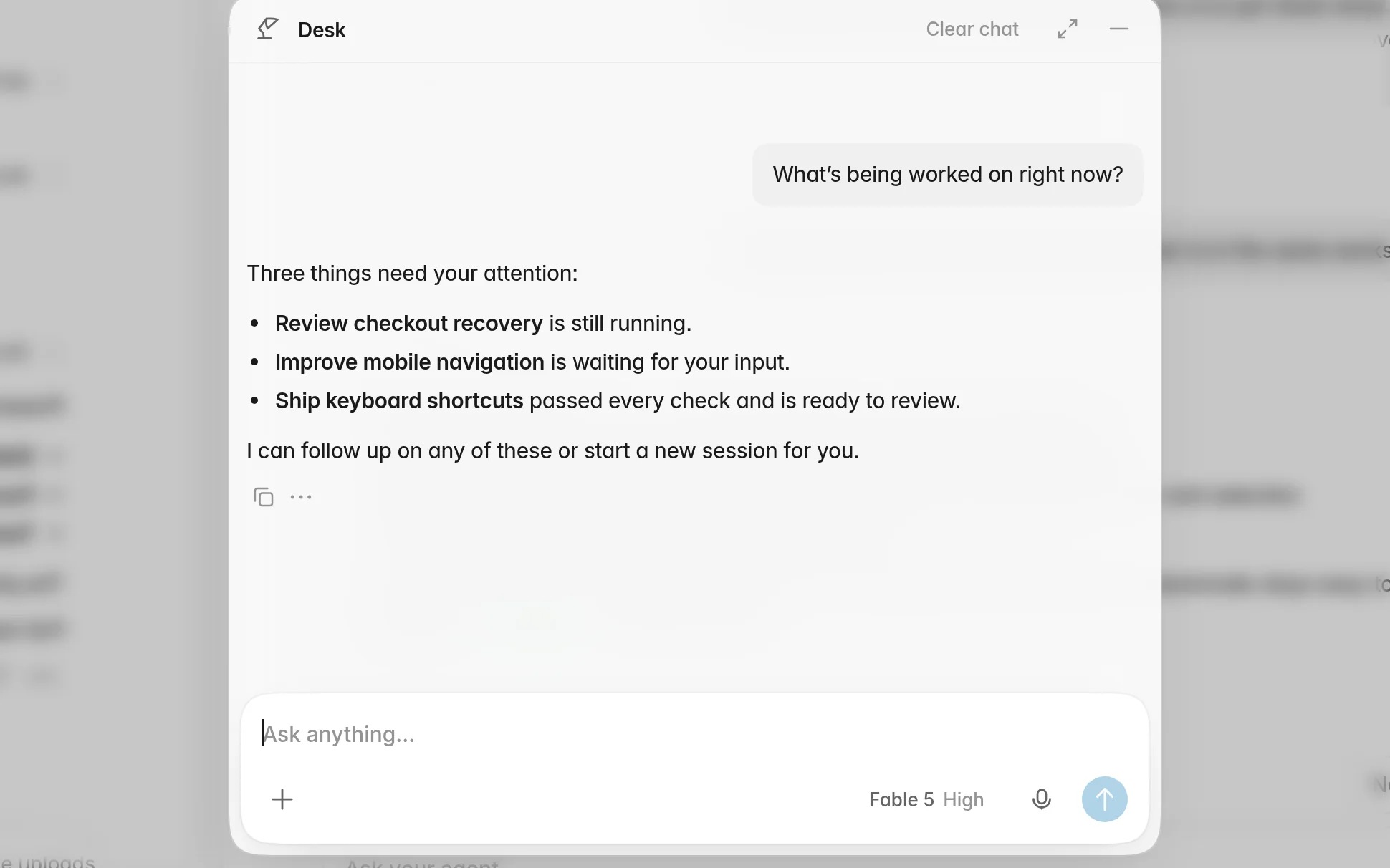
Desk mode is a persistent session for working with an agent that can use your entire server as context. You can ask it questions like “what’s being worked on right now?” or “is anything stuck in Project X?”. You can also use it for starting work more casually by first exploring ideas and doing research. The desk mode agent will then kick off more powerful sub-agents in new sessions for the work to be completed. You can use it like a team standup with your agents.
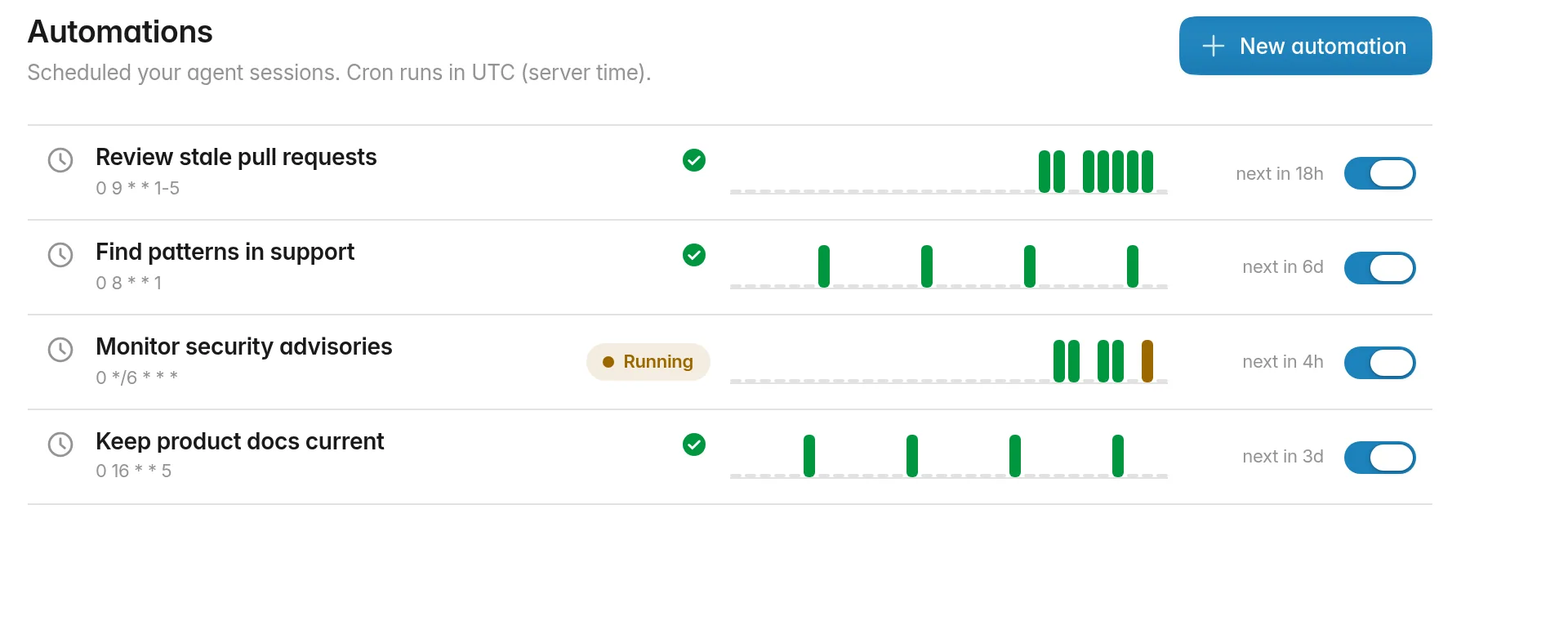
Automations are another cool feature. You give your agent a repeatable task and it will run periodic sessions required to complete the task. At Tella we have automations that review PRs, look for sloppy code, maintain product documentation, monitor infosec and a bunch more. You can connect automations to another Open Session feature called Reports. An automation will generate a periodic report with whatever findings you requested. We have reports for Tella’s SEO performance, feature requests, identifying patterns in support and tracking stale PRs.
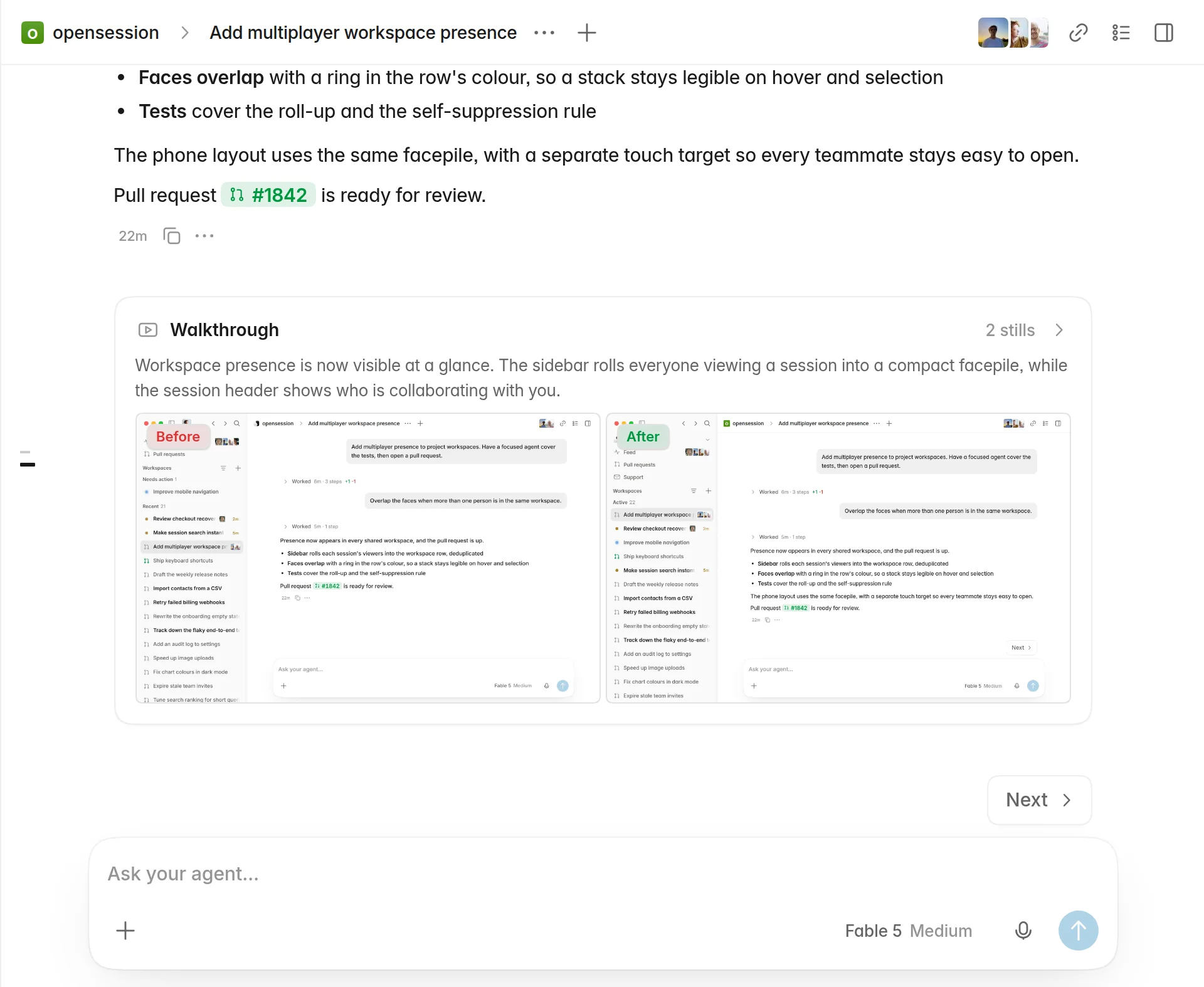
We also added a feature called Walkthroughs. These are written summaries of what the agent completed along with screenshots and demo videos. For simple changes, you might decide to ship it based only on the walkthrough, but the more important thing is how walkthroughs speed up the iteration loop. When you have multiple agents running it’s a pain to manually test and verify every iteration - too much context and surface switching. In Open Session you can review the agent’s screenshots and videos and move on.
Build your own tools
So far in 2026 we’ve used Cursor, Claude Code, Codex, Conductor, custom tmux setups, Amp, agents inside Slack, Devin, OpenClaw and more.
Open Session borrows a lot of ideas from these tools. It’s a beautiful Frankenstein of them all, but so far, it’s the best one we’ve used.
The names I mention above are the big dogs, but there’s a big long tail of smaller startups in this space. And there are many teams, like ours, who’ve built and open sourced their own. So in such a busy space it’s valid to ask: why bother doing this at all?
The answer is just that it’s an exciting time to be building software. So much is changing, and it’s so easy to make something yourself, and the best way to figure out where everything is headed is to decide the direction yourself.
Open Session is our take on how software and startups will be built in the future. We hope you like it.
Have fun!
View on GitHub